
Next-Gen Sustainable Packaging Material Market Gains Momentum Across FMCG and E-Commerce Sectors
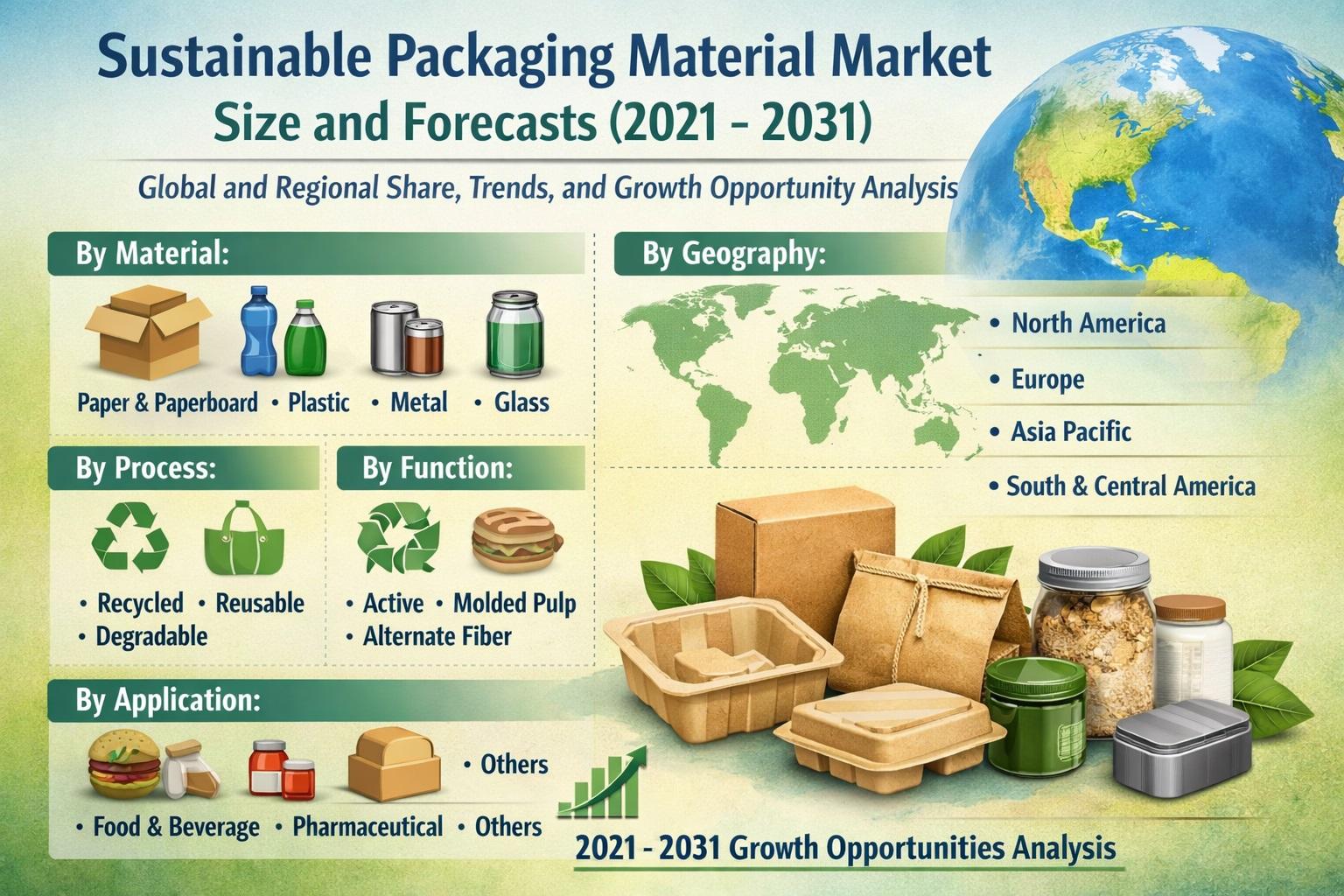
According to comprehensive market research by The Insight Partners, the Sustainable Packaging Material Market demonstrates robust growth through 2031, driven by fundamental shifts toward circular economy principles emphasizing recyclability and reusability, innovative biodegradable materials decomposing naturally without persistent environmental contamination, and active packaging technologies extending product shelf life reducing food waste while maintaining sustainability credentials. This expansion reflects the packaging industry's evolution toward renewable paper and paperboard substrates, bio-based plastics replacing petroleum-derived alternatives, infinitely recyclable metals and glass, and specialized functions including molded pulp replacing polystyrene foam and alternate fibers sourcing agricultural waste transforming packaging sustainability across food and beverage, pharmaceutical, and consumer goods applications.
Understanding Sustainable Packaging Materials and Market Fundamentals
Sustainable packaging materials constitute environmentally responsible alternatives minimizing ecological impact throughout product lifecycles from raw material extraction through manufacturing, distribution, use, and end-of-life disposal or recycling. Material diversity encompasses paper and paperboard derived from renewable forest resources offering excellent recyclability, biodegradability, and versatile forming capabilities supporting boxes, cartons, bags, and protective cushioning across food, pharmaceutical, and consumer goods applications.
Request Sample Pages of this Research Study @ https://www.theinsightpartners.com/sample/TIPMC00002632/
Market Segmentation and Functional Innovation
Functional segmentation demonstrates active packaging incorporating intelligent technologies extending shelf life through oxygen scavenging, moisture control, and antimicrobial properties reducing food waste while maintaining product quality. Molded pulp technology transforms recycled paper and agricultural fibers into protective cushioning, egg cartons, fruit trays, and electronics packaging replacing expanded polystyrene foam with biodegradable, compostable alternatives. Alternate fiber innovations leverage agricultural residues including wheat straw, bagasse, bamboo, and hemp creating paper and paperboard alternatives reducing forest pressure while valorizing agricultural waste streams.
Future Trends and Market Evolution
The market demonstrates decisive movement toward eco-friendly packaging innovations transforming consumer choices through transparent sustainability communication, carbon footprint labeling, and environmental impact quantification enabling informed purchasing decisions. Biodegradable materials revolutionize food industry through compostable films, coatings, and containers supporting organic waste diversion programs while maintaining product protection and shelf life requirements.
Key Market Players
Leading companies include Bemis Company Inc, Amcor Limited, Sealed Air Corporation, Tetra Laval International S.A., Mondi PLC, WestRock Company, BASF SE, Sonoco Products Company, Smurfit Kappa Group PLC, and Huhtamaki OYJ, driving innovation across material development, recycling technologies, and circular economy implementations.
According to comprehensive market research by The Insight Partners, the Sustainable Packaging Material Market demonstrates robust growth through 2031, driven by fundamental shifts toward circular economy principles emphasizing recyclability and reusability, innovative biodegradable materials decomposing naturally without persistent environmental contamination, and active packaging technologies extending product shelf life reducing food waste while maintaining sustainability credentials. This expansion reflects the packaging industry's evolution toward renewable paper and paperboard substrates, bio-based plastics replacing petroleum-derived alternatives, infinitely recyclable metals and glass, and specialized functions including molded pulp replacing polystyrene foam and alternate fibers sourcing agricultural waste transforming packaging sustainability across food and beverage, pharmaceutical, and consumer goods applications.
Understanding Sustainable Packaging Materials and Market Fundamentals
Sustainable packaging materials constitute environmentally responsible alternatives minimizing ecological impact throughout product lifecycles from raw material extraction through manufacturing, distribution, use, and end-of-life disposal or recycling. Material diversity encompasses paper and paperboard derived from renewable forest resources offering excellent recyclability, biodegradability, and versatile forming capabilities supporting boxes, cartons, bags, and protective cushioning across food, pharmaceutical, and consumer goods applications.
Request Sample Pages of this Research Study @ https://www.theinsightpartners.com/sample/TIPMC00002632/
Market Segmentation and Functional Innovation
Functional segmentation demonstrates active packaging incorporating intelligent technologies extending shelf life through oxygen scavenging, moisture control, and antimicrobial properties reducing food waste while maintaining product quality. Molded pulp technology transforms recycled paper and agricultural fibers into protective cushioning, egg cartons, fruit trays, and electronics packaging replacing expanded polystyrene foam with biodegradable, compostable alternatives. Alternate fiber innovations leverage agricultural residues including wheat straw, bagasse, bamboo, and hemp creating paper and paperboard alternatives reducing forest pressure while valorizing agricultural waste streams.
Future Trends and Market Evolution
The market demonstrates decisive movement toward eco-friendly packaging innovations transforming consumer choices through transparent sustainability communication, carbon footprint labeling, and environmental impact quantification enabling informed purchasing decisions. Biodegradable materials revolutionize food industry through compostable films, coatings, and containers supporting organic waste diversion programs while maintaining product protection and shelf life requirements.
Key Market Players
Leading companies include Bemis Company Inc, Amcor Limited, Sealed Air Corporation, Tetra Laval International S.A., Mondi PLC, WestRock Company, BASF SE, Sonoco Products Company, Smurfit Kappa Group PLC, and Huhtamaki OYJ, driving innovation across material development, recycling technologies, and circular economy implementations.
Next-Gen Sustainable Packaging Material Market Gains Momentum Across FMCG and E-Commerce Sectors
According to comprehensive market research by The Insight Partners, the Sustainable Packaging Material Market demonstrates robust growth through 2031, driven by fundamental shifts toward circular economy principles emphasizing recyclability and reusability, innovative biodegradable materials decomposing naturally without persistent environmental contamination, and active packaging technologies extending product shelf life reducing food waste while maintaining sustainability credentials. This expansion reflects the packaging industry's evolution toward renewable paper and paperboard substrates, bio-based plastics replacing petroleum-derived alternatives, infinitely recyclable metals and glass, and specialized functions including molded pulp replacing polystyrene foam and alternate fibers sourcing agricultural waste transforming packaging sustainability across food and beverage, pharmaceutical, and consumer goods applications.
Understanding Sustainable Packaging Materials and Market Fundamentals
Sustainable packaging materials constitute environmentally responsible alternatives minimizing ecological impact throughout product lifecycles from raw material extraction through manufacturing, distribution, use, and end-of-life disposal or recycling. Material diversity encompasses paper and paperboard derived from renewable forest resources offering excellent recyclability, biodegradability, and versatile forming capabilities supporting boxes, cartons, bags, and protective cushioning across food, pharmaceutical, and consumer goods applications.
Request Sample Pages of this Research Study @ https://www.theinsightpartners.com/sample/TIPMC00002632/
Market Segmentation and Functional Innovation
Functional segmentation demonstrates active packaging incorporating intelligent technologies extending shelf life through oxygen scavenging, moisture control, and antimicrobial properties reducing food waste while maintaining product quality. Molded pulp technology transforms recycled paper and agricultural fibers into protective cushioning, egg cartons, fruit trays, and electronics packaging replacing expanded polystyrene foam with biodegradable, compostable alternatives. Alternate fiber innovations leverage agricultural residues including wheat straw, bagasse, bamboo, and hemp creating paper and paperboard alternatives reducing forest pressure while valorizing agricultural waste streams.
Future Trends and Market Evolution
The market demonstrates decisive movement toward eco-friendly packaging innovations transforming consumer choices through transparent sustainability communication, carbon footprint labeling, and environmental impact quantification enabling informed purchasing decisions. Biodegradable materials revolutionize food industry through compostable films, coatings, and containers supporting organic waste diversion programs while maintaining product protection and shelf life requirements.
Key Market Players
Leading companies include Bemis Company Inc, Amcor Limited, Sealed Air Corporation, Tetra Laval International S.A., Mondi PLC, WestRock Company, BASF SE, Sonoco Products Company, Smurfit Kappa Group PLC, and Huhtamaki OYJ, driving innovation across material development, recycling technologies, and circular economy implementations.
0 Komentarze
0 Udostępnienia